

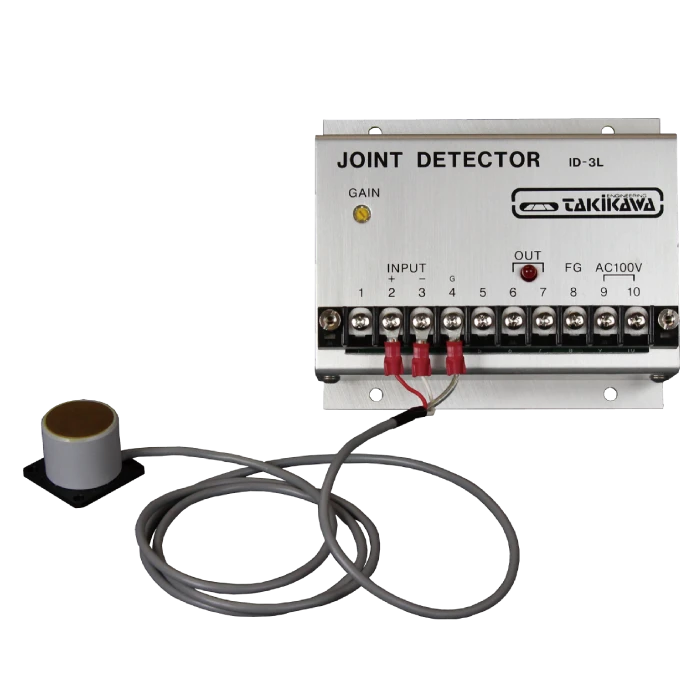
A Takikawa joint detector inspects electric cables during manufacturing to find hidden splices, breaks, and connection points by analyzing coil impedance
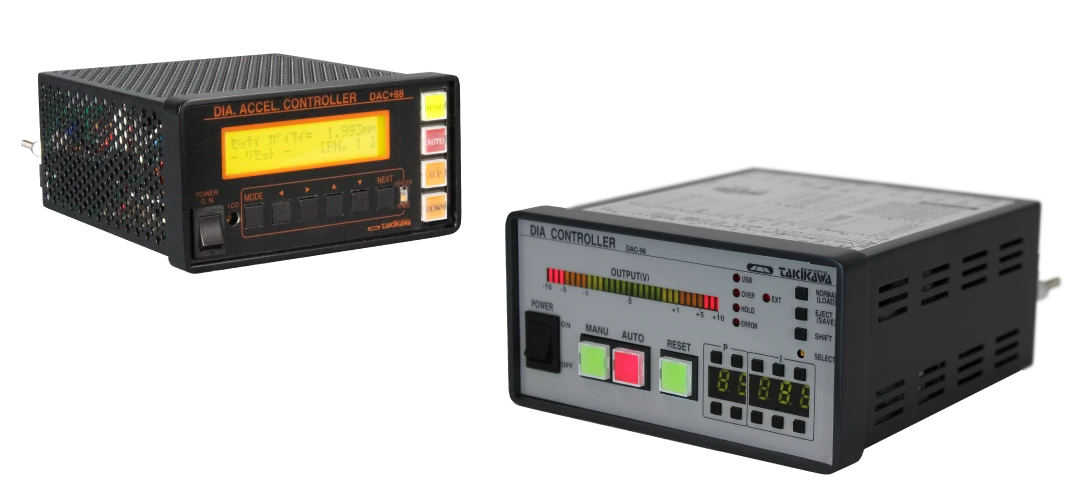
The Takikawa outer diameter control unit (DAC series) regulates the size of extruded products by sending real-time feedback signals to manufacturing machinery. It controls continuous production lines for items like wires, cables, and plastic pipes by adjusting the extruding or winding speed
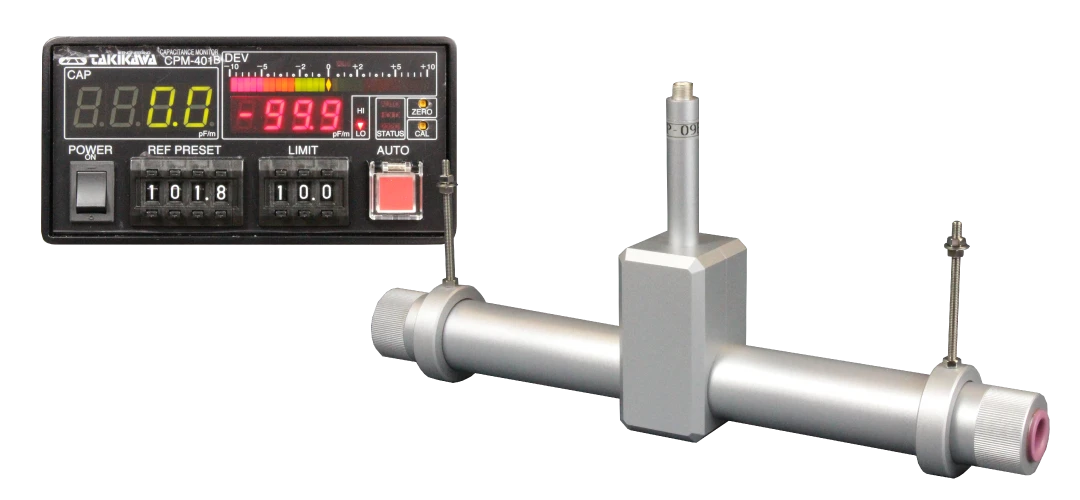
This system contains detector, repeater , display , capacitance monitor calibrator. This device continuously measures the capacitance of coated wires produced on a continuous extrusion line online. It allows you to set preset values and digitally display the deviation from the measured value. Analog output of the measured value or deviation is provided as standard.
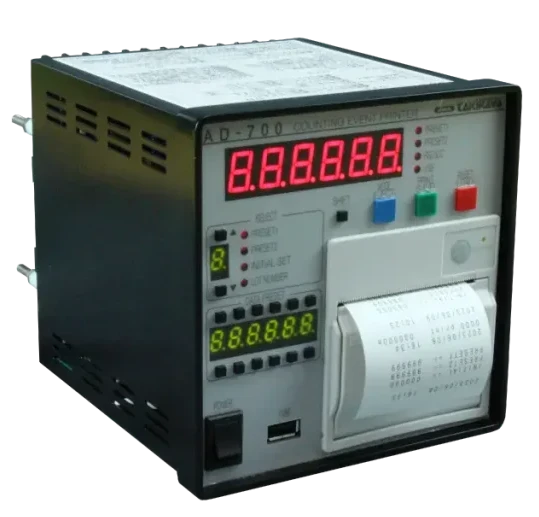
It records and prints operational data and error logs for industrial manufacturing and cable inspection lines. Key capabilities: Connects to industrial sensors to track measurements, pulse counts, and error events, printing a narrow thermal receipt log of the data
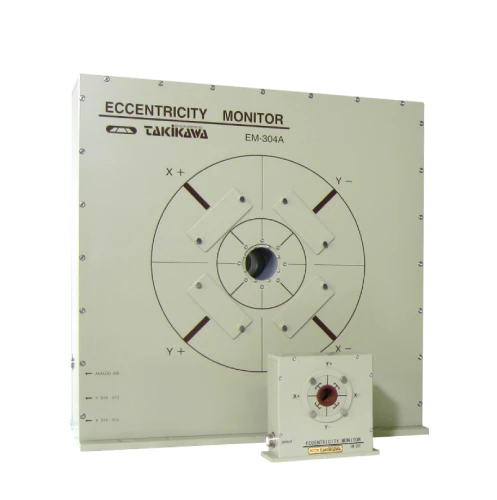
The Takikawa Engineering Eccentricity Monitor (EM Series) continuously measures the centering and outer diameter of coated electric wires during manufacturing. It detects deviations and triggers alarms if the insulation thickness or wire shape drifts off target
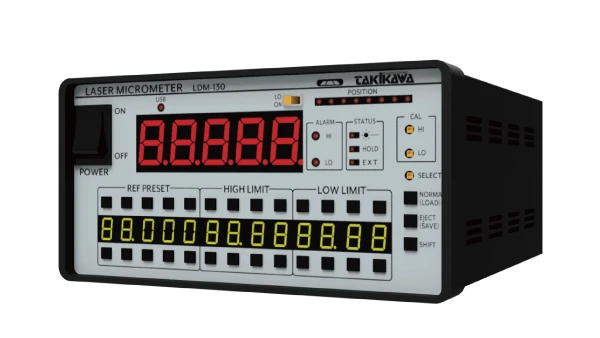
Laser diameter Measuring Instruments works with display devices which measures and display the value depending on your application. You can choose from models equipped with calculation functions for determining averages and deviations. Furthermore, they can connect with peripheral devices via interfaces such as RS232C (standard) and BCD (optional).
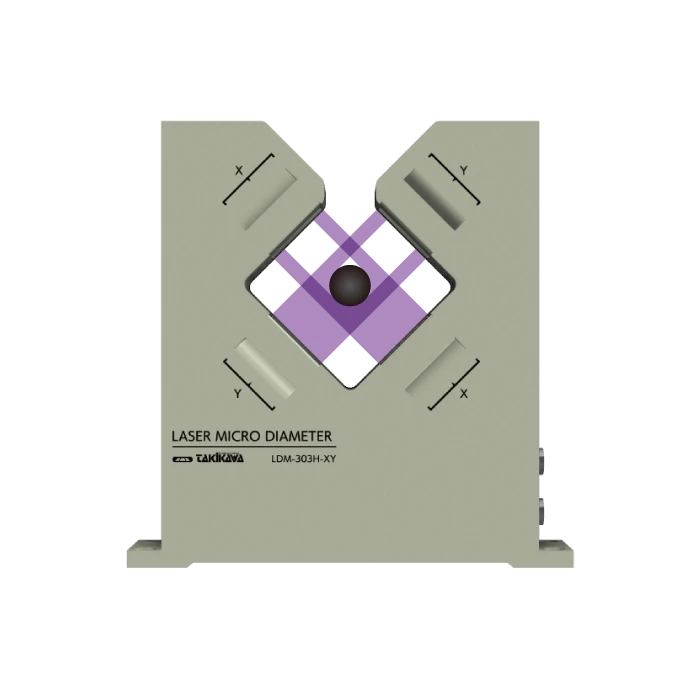
A laser outer diameter measuring instrument, also known as a laser microgauge, measures the outer diameter by converting the time the laser beam is blocked by the object being measured into a length of time. This is a standard orthogonal two-axis measurement which calculate the average value of the X and Y axis.
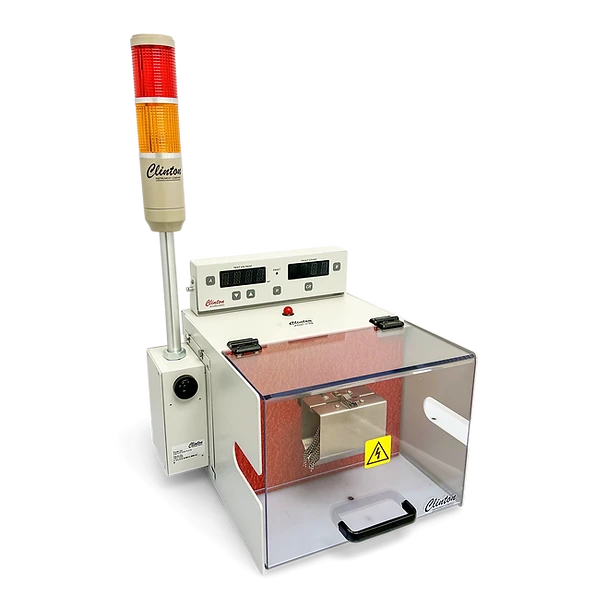
The IT-30B is the Clinton Instrument Company's Impulse Spark Tester designed as an alternative to the wet dielectric test. It is primarily used when testing wire to specifications that have not adopted the high frequency spark test such as MIL-C-13777E, MIL-W-16878D, and some NEMA specifications.
The STCAL is the Clinton Instrument Company's calibration system. It can automatically calibrate newer Clinton units and provides on-screen instructions for older equipment. The STCAL can calibrate any AC, DC, or high-frequency spark tester regardless of manufacturer and will generate a traceable certificate of calibration.