
Product Details
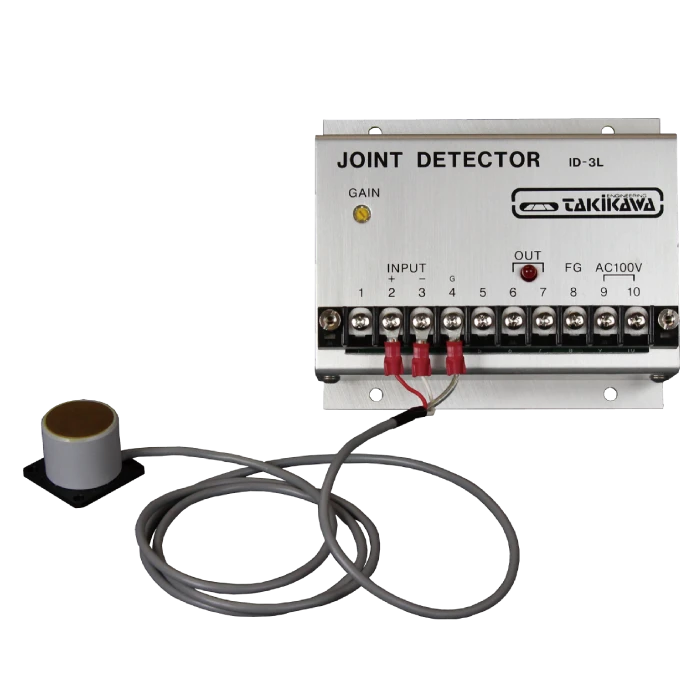
Joint/Disconnection Detector (ID)
Joint/Disconnection Detector (ID)
(0 Review)
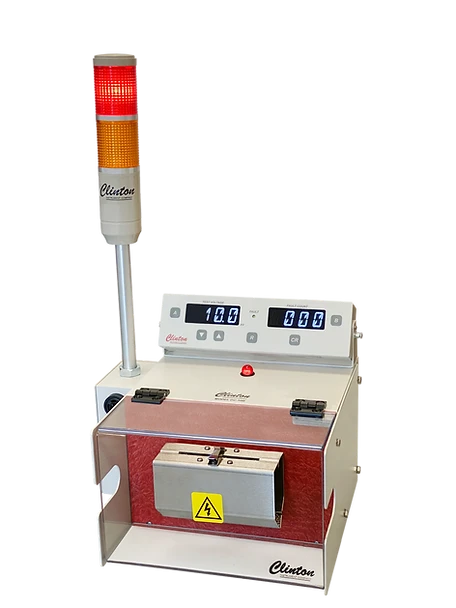
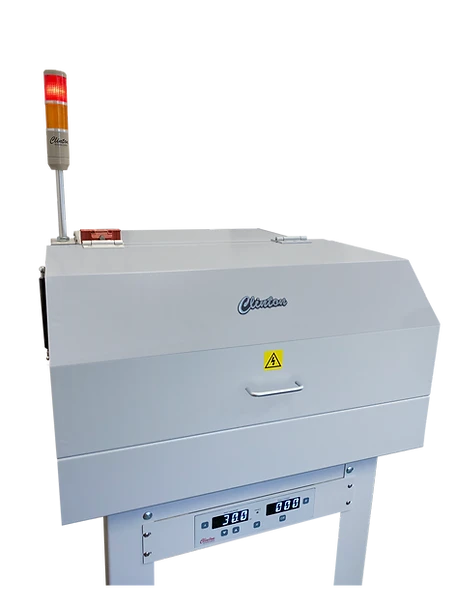
A Takikawa joint detector inspects electric cables during manufacturing to find hidden splices, breaks, and connection points by analyzing coil impedance
MKS : J-8521
Category : Joint/Disconnection Detector (ID)
Tags : JOINT DETECTOR, TAKIKAWA
Joint detector
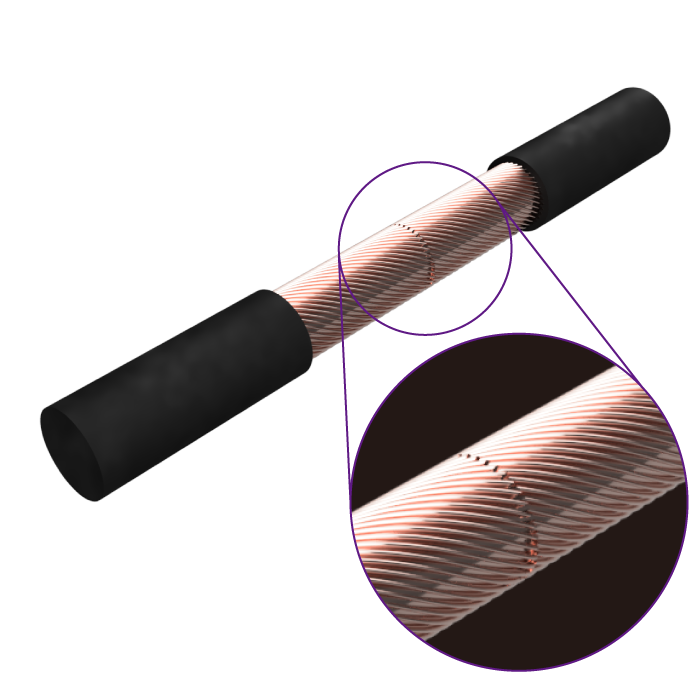
The joints in the cable core wires differ from normal materials and shapes due to brazing, crimping, or the inclusion of iron wire.
A joint detector is a device designed to prevent joints from being incorporated into products by detecting eddy current losses that occur at joints.
Depending on the model, it can also detect breaks in the wire, joints inside the shielded wire, and joints created by pressure welding or welding that do not change the outer diameter.
Features of joint detectors
- Non-contact, high-speed, and continuous detection is possible simply by passing the object through the sensor.
- The detection level setting is displayed as a bar graph, making it highly visible.
- It can handle a wide range of workpieces, from extremely thin wires to extremely thick wires.
- With ceramic guides, there's no need to worry about wear and tear.
- It can also be used as a metal passage sensor, and counting is possible by connecting a counter.
 Product Lineup
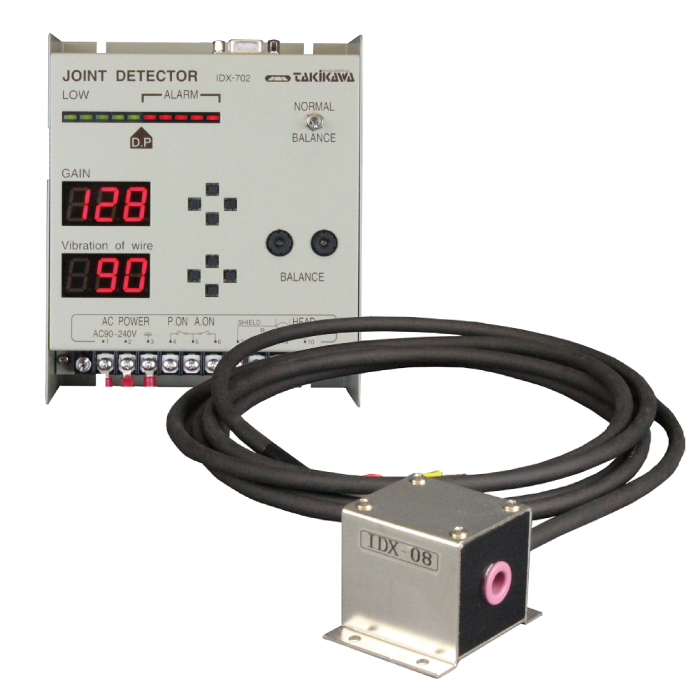
ID/IDS/IDX series
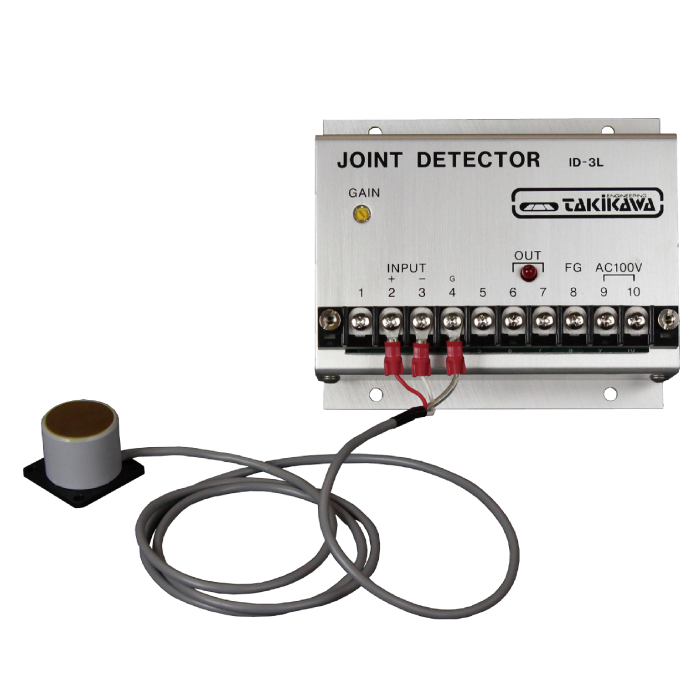
ID-3L (open type)
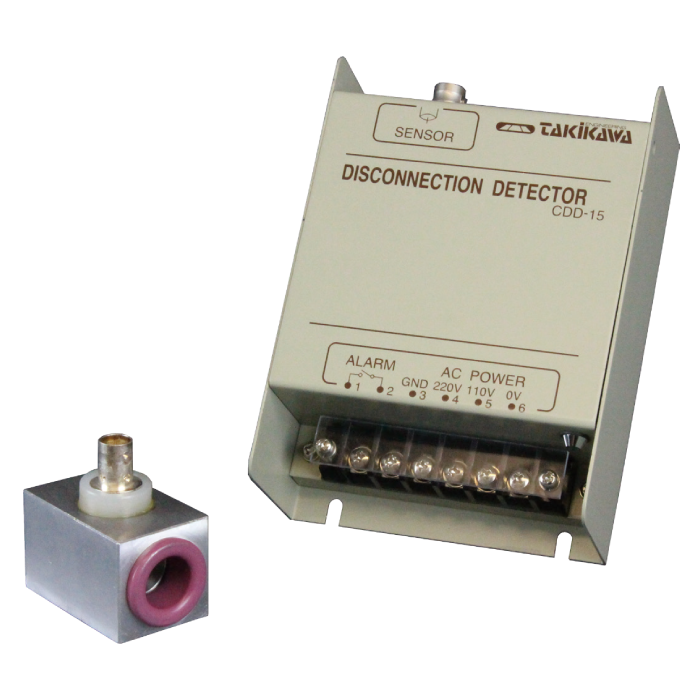
CDD-15 (Cable break detector)
Feature comparison
Model
ID-3L
ID
IDS
IDX
Long Points
Compatible with diameters up to 10mm.
Wide variety of sensors available
Strong against wire vibrations
Strong against wire vibrations
Sensitive target
Magnetic material (iron)
*Does not affect steel
All types of metals
*Sensitive to twisting and alloy joining
Metals (magnetic materials)
*Also sensitive to twisting and alloy joining
All types of metals
*Sensitive to twisting and alloy joining
Shielded wire
Usable
unsuitable
Compatibility
Compatibility
Important Notes
Pay attention to the detection area.
Pay attention to the vibration of the wires.
Pay attention to the vibration of the wires.
Pay attention to the vibration of the wires.
ID/IDS/IDX series
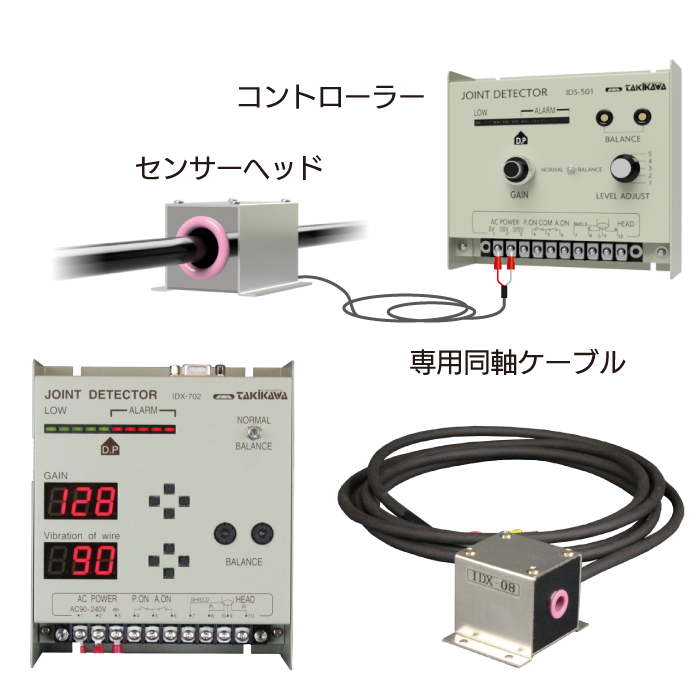
The IDS series sensor head consists of three coils, while the IDX series consists of two coils.
The joint is detected by analyzing and comparing the impedance balance of both coils, which is disrupted by eddy current losses causing changes in magnetic resistance as the coils pass over the joint, using a controller.
Compared to the ID series, the IDS/IDX series is designed to be more resistant to line fluctuations during measurement.
specification
ID Series
mode Model ID-3 ID-5 ID-8 ID-15 ID-30 ID-50 ID-90 principle Through type eddy current loss type Through the diameter φ3mm φ5mm φ8mm φ15mm φ22.5mm φ50mm φ90mm controller Model ID-1001/100W Detected output Red LED lights up, 0.5-second single-shot normally open contact. Signal Monitor Bar graph LED display How to set sensitivity 10-rotation dial power supply AC100~110V or AC200~220V 50/60Hz with power supply notification output. Power consumption 5VA
IDS Series
mode Model IDS-15 IDS-24 IDS-60 IDS-100 principle Through-type eddy current loss bridge magnetoresistance detection type Through the diameter φ15mm φ24mm φ57mm φ100mm controller Model IDS-501 Detected output Red LED lights up, 0.5-second single-shot normally open contact. Signal Monitor Bar graph LED display How to set sensitivity 10-turn dial / 5-level sensitivity switching power supply AC100~200V 50/60Hz Power consumption 5VA
IDX Series
mode Model IDX-03 IDX-06 IDX-061 [*1] IDX-08 IDX-15 IDX-30 principle Through-type eddy current loss high-sensitivity bridge magnetoresistance detection type Through the diameter φ3mm φ6mm φ6mm φ8mm φ15mm φ30mm controller Model IDX-701/702 Detected output Red LED lights up, 0.5-second single-shot normally open contact. Signal Monitor Bar graph LED display How to set sensitivity 10-rotation dial / Line runout adjustment dial power supply AC100~220V 50/60Hz Power consumption 12 VA or less
[*1] IDX-061 is a high-speed compatible model.
ID-3L
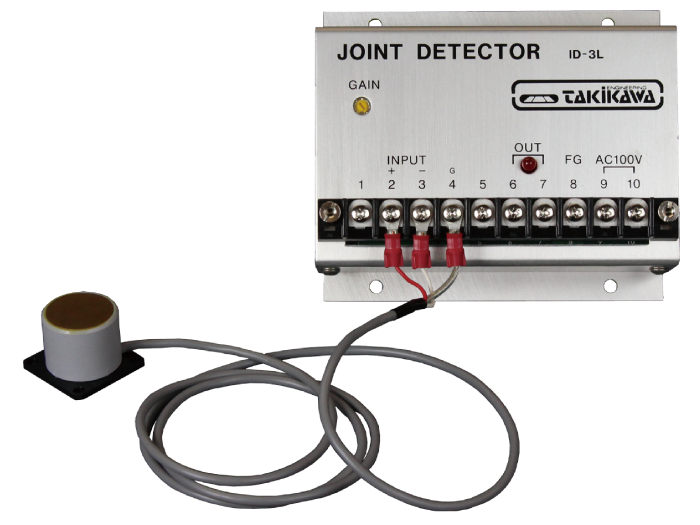
The movement of the iron material is monitored by the electromotive force generated when a small amount of magnetic material (iron) mixed into the joint of the core wire moves.
Because it is an open-type sensor, it does not need to pass through the object being measured, and it is completely unaffected by materials other than iron, making it highly resistant to line fluctuations within the detection area.
specification
mode Model ID-3L principle Proximity-type magnetic power generation Detection status 15mm controller Model - Detected output Red LED lights up, 0.5-second single-shot normally open contact. Signal Monitor none How to set sensitivity Volume control (1 turn) power supply AC100V 50/60Hz Power consumption 2VA
CDD-15 (Cable break detector)
A normal cable will show some capacitance value, but a cable with a broken core wire will almost always show 0pF.
By using the cable's insulation and air as dielectrics and measuring the capacitance formed between the core wire and the detection electrode, a break in the cable's core wire is detected.